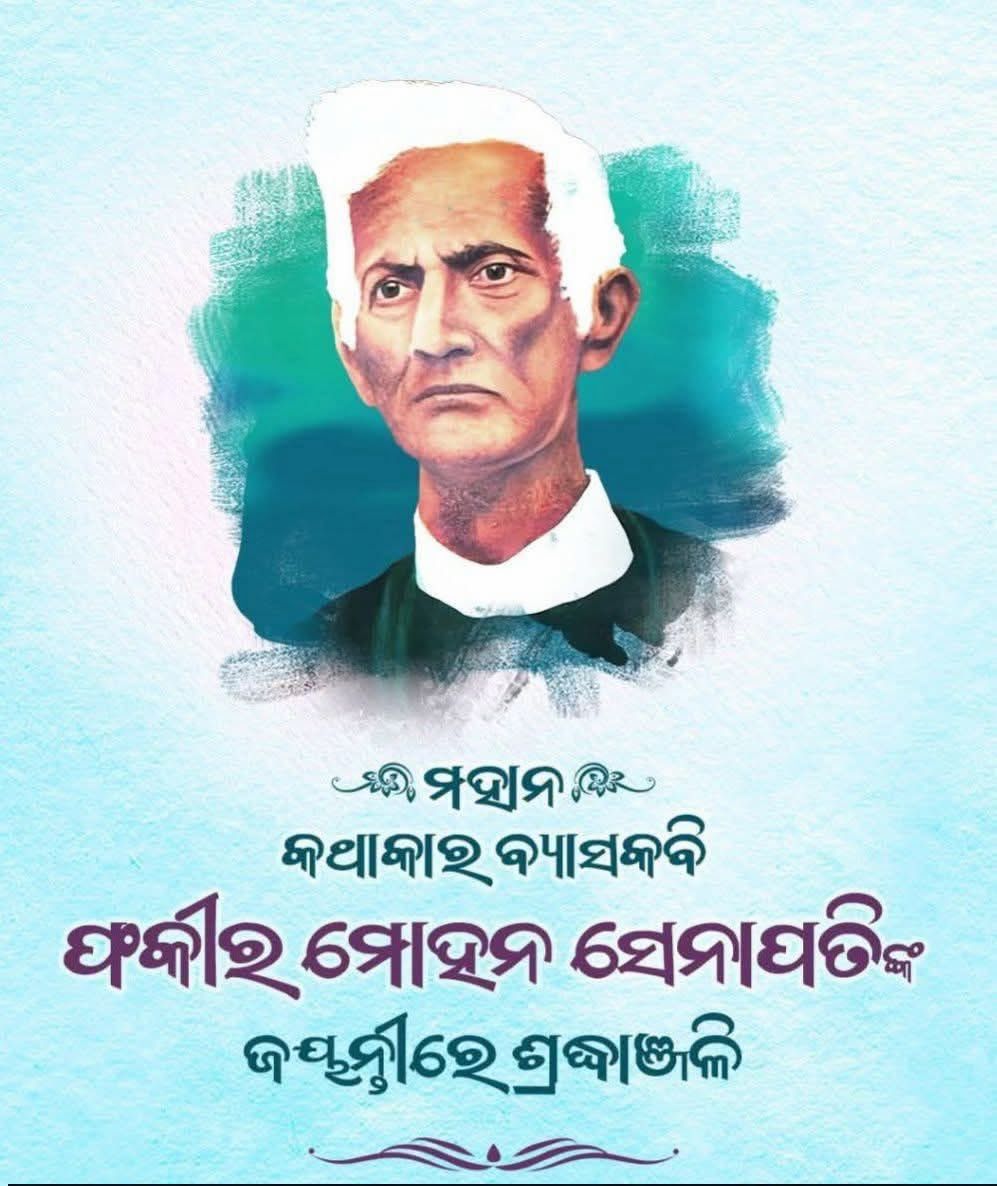
On the sacred day of Makar Sankranti, January 13, 1843, a literary titan was born—Fakir Mohan Senapati, the unparalleled emperor of Odia literature and a fearless reformer. Orphaned young and raised by his grandmother amid poverty and fragile health, he defied adversity with sheer determination, teaching himself Sanskrit and English when formal education seemed impossible.
The devastating famine of 1866 stirred his soul, compelling him to act—not with weapons, but with words. After his grandmother’s passing, Fakir Mohan dedicated his life to preserving Odia language and culture, which faced the threat of extinction. He wrote traditional chou-padi songs, staged Krishna Lila dramas, and established a printing press in Balasore, launching a weekly newspaper that carried both news (Sambad Bahika) and literature (Bodh Dayini).
His first short story, “Lachmani,” became a cornerstone of Odia prose. But Fakir Mohan’s vision extended beyond literature—he championed women’s education, a radical idea in his time. In his groundbreaking story Rebati, he declared:
“All girls have equal right to get education.”
This simple yet powerful truth challenged centuries of prejudice. Yet, he also exposed societal resistance through Rebati’s grandmother’s fearful cry:
“Rebati! Reba! You are fire that turns all to ashes.”
These words reveal how deeply entrenched superstitions viewed a girl’s thirst for knowledge as dangerous—a flame that could consume tradition.
Fakir Mohan’s writings brim with timeless wisdom. In Chha Mana Atha Guntha, he asserted:
“Great souls do not go about saying how much money they have spent on a noble deed.”
A reminder that true virtue lies in silent compassion. His sharp satire pierced hypocrisy:
“In the land of the blind, the one-eyed man is king. But in our village, the king is blind and everyone else has lost their voice.”
Through such lines, he exposed corruption and the silencing of common voices.
Even imprisonment by Keonjhar rebels could not break his spirit—he escaped through wit and immortalized the episode in his satirical poem Utkal Bhraman. His literary treasures—Chha Mana Atha Guntha, Lachma, Mamu, Prayashchit—and his monumental translation of the Mahabharata earned him the revered title “Vyasa Kabi.” As President of Utkal Sammilani, he fought for Odia identity and unity.
On June 14, 1918, Fakir Mohan left this world, but his words endure—reminding us that education, equality, and courage can transform society. His life is a clarion call: when faced with adversity, rise above it; when culture is threatened, defend it; and when voices are silenced, speak louder. Bande Utkala janani
Dhirendra Kumar Kar
USA
About the Author