Saikat Kumar Basu
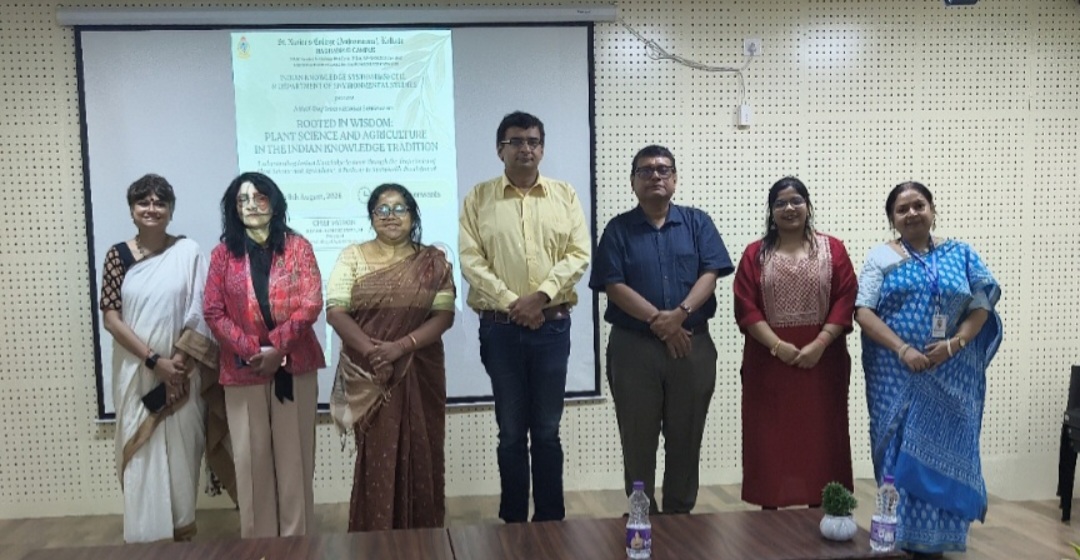
The Department of Environmental Studies, in collaboration with the IKS Cell (Raghabpur Campus) at St. Xavier’s College (Autonomous), Kolkata, successfully hosted a half-day International Seminar focusing on Indigenous Knowledge Systems (IKS) in Plant Science and Agriculture on the 8th of August, 2026 at the Raghabpur Campus of the St. Xavier’s College (Autonomous), Kolkata. The seminar served as an impactful platform for intellectual engagement.
Dr. Arup Kumar Mitra (HOD, Environmental Studies, SXC) provided profound insights into traditional agricultural practices derived from ancient Hindu scriptures. Dr. Saikat Kumar Basu, Executive Research Director, PFS, Alberta, Canada, addressed the crucial conservation ethics of indigenous and marginalized tribes in protecting medicinal plants in India, calling attention to the need for greater institutional recognition and support. The event stood as a true testament to the academic value of Indigenous Knowledge Systems in bridging traditional wisdom with contemporary scientific inquiry. The seminar underscored how IKS offers a holistic, time-tested framework for sustainable agriculture and plant conservation—one that has long been embedded in the lived practices of local and tribal communities across India. Speakers emphasized that these systems, though often undocumented and orally transmitted, encapsulate generations of ecological observation, biodiversity stewardship, and sustainable resource management that remain highly relevant to addressing modern challenges such as climate resilience, soil health, and the preservation of medicinal flora threatened by habitat loss and unregulated exploitation.
The discussions reinforced the urgent need to integrate IKS into mainstream academic curricula and policy frameworks, ensuring that traditional ecological knowledge is not merely preserved as heritage but actively applied in contemporary conservation strategies. Participants, including faculty members, researchers, and students, engaged in enriching dialogue on the interface between scripture-based agricultural wisdom and indigenous conservation ethics, recognizing both as complementary pillars of sustainable development. The seminar concluded with a call for continued interdisciplinary collaboration, institutional support, and further research to document, validate, and disseminate indigenous knowledge for the benefit of both academia and society at large.
About the Author